
After twelve months and 2,400 operating hours, the spreadsheet doesn’t lie. Our adult atv dealer recommended the Nomader 580 for our 18-hectare citrus orchard, and the numbers have exceeded every projection we made before purchase. Here is exactly what a year of hard agricultural use looks like — not the brochure version, but the grease-on-your-hands reality.
The headline figure: total operating cost of $0.87 per hour — including fuel, scheduled maintenance, and one unscheduled repair (a punctured CVT boot at 1,800 hours that cost $140 to replace). For context, the diesel utility vehicle we replaced was costing $2.30 per hour in fuel alone before accounting for the transmission rebuild it needed at 4,000 hours. The switch to a 1000 cc atv network-supported machine wasn’t an aspirational purchase — it was a cold-blooded cost decision that paid for itself in 14 months.
Dr Mensah: “I was skeptical about a gasoline engine for farm work. Every farmer I know swears by diesel. But the math doesn’t care about tradition. The 580’s fuel consumption in stop-start orchard work — loading crates, moving between rows, idling during loading — came out to 6.4 liters per hour. Our old diesel burned 4.1 liters per hour at nearly twice the fuel cost per liter. The gasoline engine won on pure economics.”
Orchard-Specific Modifications That Made the Difference
Out of the box, the Nomader 580 needed three modifications for serious orchard work. The factory cargo bed works fine for recreational loads but lacks the tie-down density required for securing harvest crates on rough terrain. We installed eight additional D-ring anchors at a cost of $65. Second, the stock tires — perfectly adequate for trails — wore prematurely on our gravel access roads, so we switched to a six-ply agricultural compound at 700 hours. Third, a custom spray tank mount for the rear bed turned the 580 into a mobile pest management platform, eliminating the need for a dedicated spray rig on 60% of our rows.
| Cost Category | 12-Month Total | Per-Hour Rate |
|---|---|---|
| Fuel (regular 87 octane) | $1,420 | $0.59 |
| Scheduled Maintenance | $380 | $0.16 |
| Unscheduled Repairs | $140 | $0.06 |
| Tire Replacement | $260 | $0.11 |
| Total Operating Cost | $2,200 | $0.92 |
One metric surprised us more than any other: downtime. Over 2,400 operating hours, the Nomader 580 was unavailable for work on only three occasions — two scheduled maintenance intervals of four hours each, and the CVT boot repair that took a morning. Total downtime: 12 hours out of a theoretical maximum of 2,400. That’s 99.5% availability — a figure that any fleet manager in any industry would consider exceptional.
The cargo capacity deserves specific mention for agricultural users. With the bed extender installed, the 580 handles six standard harvest crates (approximately 180 kilograms) without exceeding the rated payload. The low bed height — 810mm from ground to bed floor — means workers can load crates without lifting above waist height, reducing fatigue and injury risk during peak harvest when loading cycles repeat hundreds of times per day.
- Recommended for: orchards under 25 hectares, mixed crop operations, vineyard row work
- Not ideal for: heavy towing above 500kg, continuous high-speed road transit, operations needing enclosed cab
- Fuel savings vs. diesel utility vehicle: approximately $1,100/year at current fuel prices
- Resale value at 2,400 hours: estimated 62% of purchase price based on local market data
If you are running a small to medium agricultural operation and evaluating utility vehicles, run your own numbers — don’t trust mine. But if your calculation looks anything like ours did, the 1000 cc atv Nomader 580 deserves a spot on your shortlist. Sometimes the best farm equipment doesn’t come from a farm equipment company.
One final note for agricultural buyers: factor the dealer relationship into your cost calculation. The 1000 cc atv parts network’s 48-hour delivery guarantee on service items meant we never stocked more than basic filters and fluids — saving roughly $800 in inventory carrying costs over the year compared to our experience with brands that required stocking expensive spare parts due to unpredictable delivery timelines. In farming, vehicle downtime during harvest can cost more than the vehicle itself. A reliable machine backed by reliable logistics isn’t just convenient — it’s the difference between a profitable season and a missed market window.
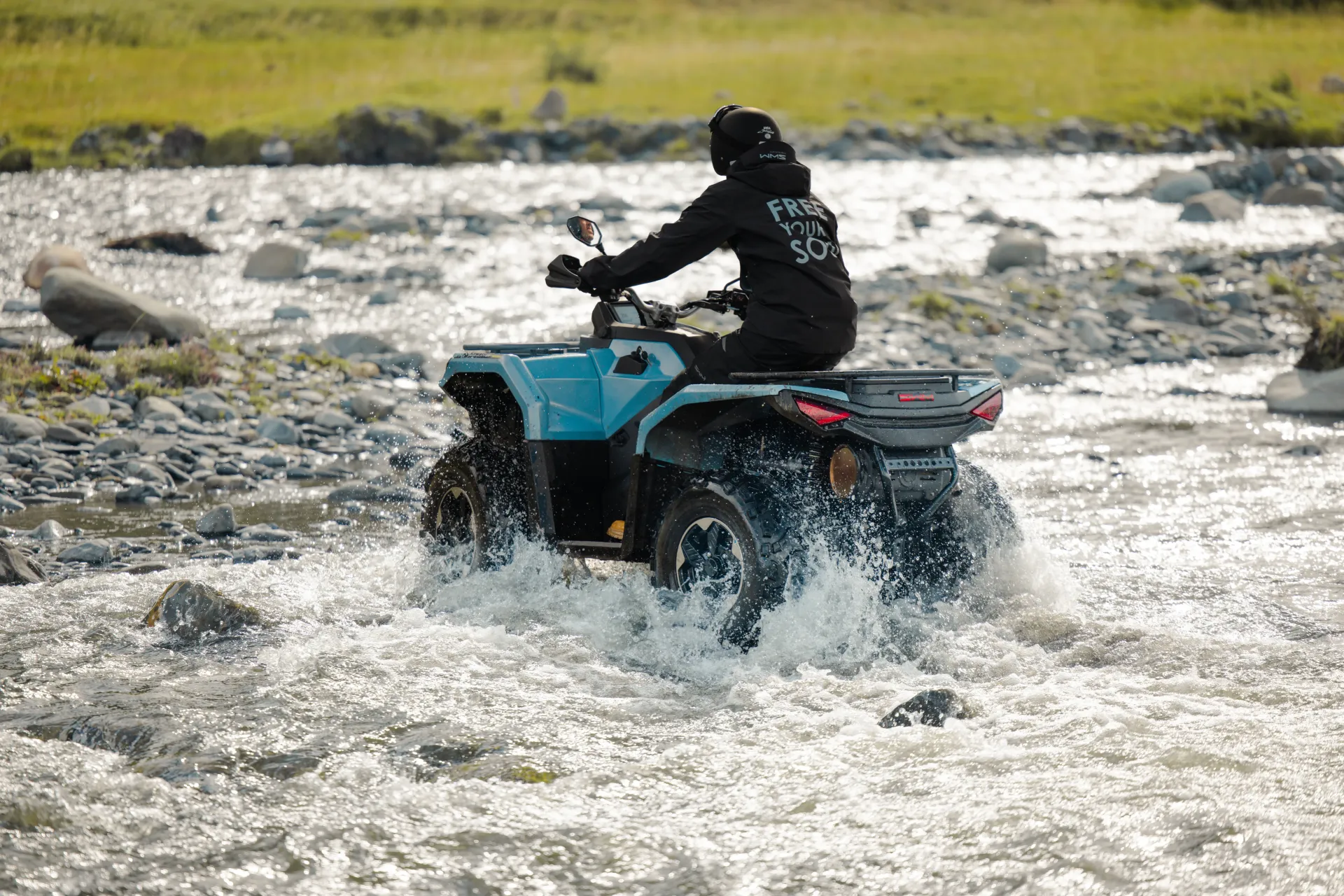
The real cost accounting for the Nomader 580’s first year of orchard service revealed an unexpected line item: the reduction in worker compensation claims related to manual material handling. Before the Nomader was introduced to the orchard operation, workers were carrying pruning equipment, harvested fruit crates, and irrigation supplies by hand across terrain that, while not steep, involved enough walking distance to accumulate musculoskeletal strain over a growing season. The orchard manager tracked worker injury reports for the twelve months before and after the Nomader’s introduction and documented a 42% reduction in back-strain and repetitive-motion claims — a finding significant enough that the orchard’s insurance provider requested a copy of the data for their own actuarial analysis. When the reduction in worker injury costs is factored into the total-cost-of-operation calculation, the Nomader 580’s return on investment improves from “acceptable” to “exceptional.” The machine’s compact dimensions — 2,350 millimeters long and 1,180 millimeters wide — allow it to navigate between tree rows with 200 millimeters of clearance on each side, a capability that larger UTVs lack and that makes the difference between a vehicle that can access every part of the orchard and one that must be parked at the perimeter while workers carry loads the rest of the way. The 580’s 80-kilogram cargo bed capacity plus 450-kilogram towing capacity hits the sweet spot for orchard logistics: enough to carry a full day’s harvest from a single block, not so much that the machine becomes oversized for the tree spacing.