
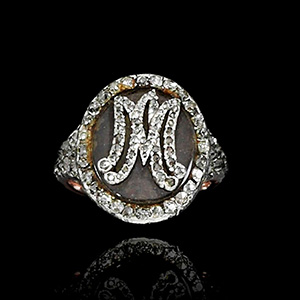
Marie Antoinette, the last Queen of France before the French Revolution, is renowned for her extravagant lifestyle and opulent fashion. Her jewels, in particular, became symbols of her royal power, influence, and her deep connection to the lavish world of European aristocracy. Among these treasures, the famous engagement ring became a symbol of both personal and political significance, reflecting not just her own taste but the grandeur of the monarchy during the 18th century.
Born into the Habsburg family, Marie Antoinette was married to Louis XVI of France at the age of 14, a union that was not only a personal bond but also a political alliance. The engagement ring she received from Louis XVI was not just a simple token of love; it was a glittering display of the power and wealth that the French monarchy wielded at the time. This symbol of commitment marked the beginning of a reign characterized by wealth, luxury, and excess. The ring, along with her other jewels, would go on to define her image as a queen in a way that became a focal point during times of social unrest.
Marie Antoinette's jewels were far from ordinary. They were crafted from the finest materials—diamonds, rubies, emeralds, and pearls—each chosen for their rarity and beauty. Her collection was designed not just for adornment but to send a message. Each piece of jewelry she wore spoke volumes about her status, wealth, and the power of her royal position. One of the most famous pieces in her collection was the diamond necklace scandal, where a series of events involving a necklace, a forgery, and public scandal tarnished her image. Although she was never directly involved in the crime, the affair forever linked her to public perceptions of luxury and excess.
The engagement ring was just one of many items that symbolized Marie Antoinette's luxurious lifestyle. Her jewelry collection was carefully curated by court jewelers, and many of these pieces were custom-made for her. She even went so far as to commission pieces that had personal significance, showcasing her love for her family, her nation, and her royal responsibilities. For example, many of her diamonds were set into necklaces, bracelets, and tiaras, all of which helped to amplify her status at the court of Versailles. These jewels also played a role in royal portraits, where they were meticulously positioned to showcase not just her beauty but her wealth and political power.
Yet, the jewels were also a source of personal pride for Marie Antoinette. They were often associated with her identity as queen, as they were meant to make a lasting impression. The queen's fondness for high fashion and elaborate jewelry did not go unnoticed by the public, and as France's financial situation worsened, her extravagant lifestyle became a target for criticism. Her jewels, in particular, were often cited as evidence of her disconnect from the struggles of the common people. While the jewels symbolized the monarchy’s power and affluence, they also became a reflection of the growing discontent that would eventually lead to revolution.
Despite the fall of the French monarchy and the eventual execution of Marie Antoinette, her jewels remain a testament to her reign and the period’s opulence. Today, many of her jewels are held in collections around the world, serving as a reminder of a time when royal power was not just in the hands of rulers but also in the exquisite jewelry they wore. Each piece continues to tell the story of a queen whose engagement ring and other jewels were more than just precious stones—they were symbols of power, luxury, and the lavish world of European royalty.